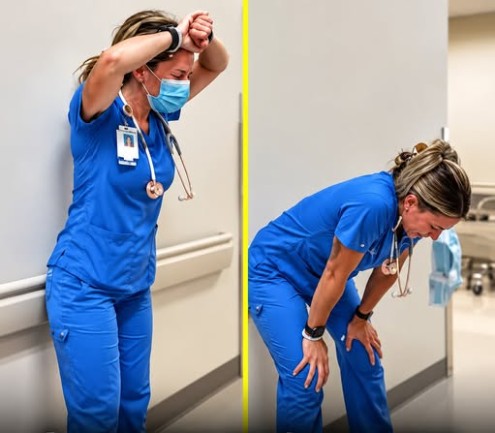
The hardest part wasn’t always losing a patient.
Sometimes, it was what came afterward.
It was standing quietly in the hallway, taking a deep breath and trying to stop the tears before anyone saw them.
Then, only a few minutes later, walking into another patient’s room with a calm expression and saying, “How are you feeling today?”
For healthcare workers, grief can arrive in the middle of an ordinary shift.
A patient may have been someone they cared for over days, weeks or even months. They may have learned the person’s favorite stories, remembered their family members and become familiar with the little details that made them more than just a name on a chart.
Then suddenly, everything changes.
The room becomes quiet.
The conversations stop.
And there is paperwork to complete, equipment to clean and another patient waiting for care.
There is rarely time to completely process what just happened.
A nurse might step into a supply room and wipe away tears.
A doctor might sit alone for a moment before returning to the hallway.
A healthcare assistant might take one deep breath, straighten their uniform and continue working.
Not because they didn’t care.
Because someone else still needed them.
That may be one of the most difficult parts of working in healthcare: learning how to carry grief while continuing to provide comfort to others.
Patients and families may see a professional who appears calm, focused and confident.
What they don’t always see is everything happening behind that expression.
The quiet moment after leaving a room.
The memories that remain after a patient is gone.
The colleague who checks in with them without saying much because they understand.
Healthcare workers are trained to care for others, but they are also human beings.
They can become attached.
They can feel helpless.
They can cry.
And they can grieve.
Yet the next patient still needs medication.
Another family still needs an explanation.
Another person is frightened and waiting for someone to tell them that they are not alone.
So they keep going.
They walk into the next room.
They listen.
They reassure.
They do their job.
And sometimes, when the shift finally ends, they allow themselves to feel everything they had to put aside during the day.
The public often sees healthcare workers as strong people who know exactly what to do.
But strength does not mean never being affected.
Sometimes strength is wiping away the tears, taking another breath and showing up for the next person who needs you.
Because behind every uniform is a human being—and sometimes, that human being is hurting too.