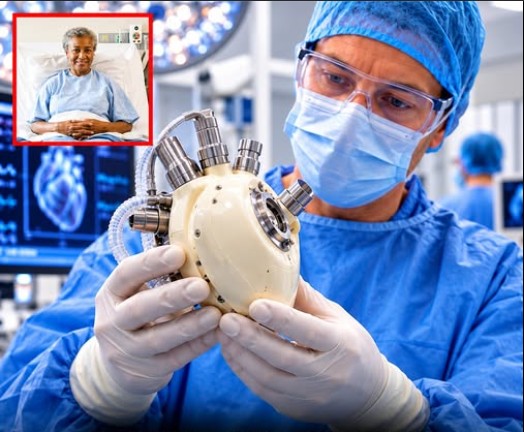
What sounds like something from science fiction is becoming part of the rapidly developing world of medical technology.
French engineers and researchers have worked on artificial-heart technology designed to do more than simply replace the pumping function of a natural heart. One of the major challenges in developing an artificial heart is creating a system that can respond appropriately as the body’s needs change.
A person does not require the same amount of blood flow while sleeping as they do while walking, exercising or experiencing physical stress.
The human heart naturally adjusts its activity according to those changing demands. Engineers developing artificial hearts therefore face the difficult task of creating technology capable of responding to the body’s signals.
Modern artificial-heart systems are being designed with sensors, electronic controls and mechanical components that can help regulate circulation.
The goal is to make the device behave more naturally by adjusting blood flow according to the patient’s activity and physiological needs.
This type of technology could represent an important development for people suffering from severe heart failure who have limited treatment options.
Traditional mechanical circulatory-support devices have already helped patients whose hearts cannot pump enough blood on their own. However, reproducing the complex behavior of a healthy human heart remains a major engineering challenge.
Researchers must consider factors including blood pressure, oxygen demand, physical activity and changes in circulation.
The idea of an artificial heart responding to activity is particularly significant because the cardiovascular system is constantly adapting.
During exercise, muscles require more oxygen, causing the heart to increase blood flow. During rest, the body’s demand is lower. A successful artificial-heart system needs to account for these differences while maintaining stable circulation.
French research teams have been involved in some of the world’s most advanced artificial-heart projects. Their work has contributed to efforts to create devices that are smaller, more responsive and more compatible with the human body.
However, it is important to remember that artificial-heart technology remains a highly specialized area of medicine. Devices must undergo extensive testing and clinical evaluation before they can become widely available.
The technology also does not mean that an artificial heart simply functions exactly like a natural heart. Engineers continue to work on improving reliability, durability, energy consumption and the way devices respond to changes in the patient’s condition.
Still, the progress is remarkable.
For patients living with advanced heart failure, developments in artificial-heart technology offer another potential path when conventional treatments are no longer sufficient.
What once seemed impossible—creating a mechanical system capable of supporting the circulation of a human body—is now an active area of medical research.
The next generation of artificial hearts may become increasingly responsive, helping medical technology move closer to reproducing one of the body’s most complex and essential functions.